Push Vs Pull Marketing
I spent years using the same aggressive tactics as every internet marketer. Fake urgency, countdown timers, and relentless upsells. Then Jay Abraham's Strategy of Pre-Eminence showed me a better way.
Early in my career I studied a lot of internet marketing gurus. I learned a ton from their books and courses, but I was also watching how they marketed themselves in real time. I was in their market. They were selling to me.
And boy, were they selling hard.
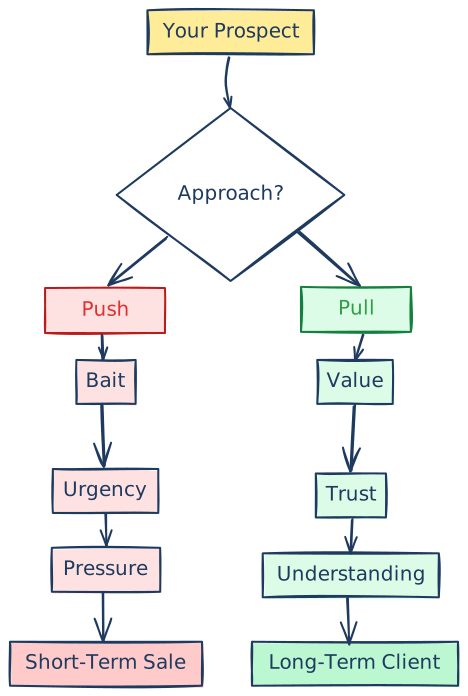
Push Marketing
We've all been on the receiving end of this. Aggressive marketing designed to overcome your objections and pressure you into buying right now.
Here's what I kept seeing:
- Artificial scarcity. Everything was a "one-time offer" they threatened to pull from the market. These were info-products with huge margins and pricing they controlled, but they always acted like forces beyond their control were making them do this.
- Fake urgency. Countdown timers, hard deadlines, waves of aggressive follow-up emails. All manufactured pressure.
- Immediate lead magnets. The very first interaction was dangling bait to grab your email address. Transactional from the start.
- Bait and switch. You'd click into what looked like educational content and get a nonstop pitch fest. I don't even mind being sold to, but only when the seller is upfront about it.
- Endless upsells. After every product launch or affiliate offer came an upsell. Then a second upsell. They work, but it got old fast.
Does push marketing work? Absolutely. It taps into primal stuff like fear, insecurity, hope, and desire. These tactics have been around forever. The internet just gave them a shiny coat of paint through funnels and automation.
But marketing at people instead of with them only works for so long. People are seeing more advertising than ever and getting more sophisticated as a result. A lot of them have been burned before and they have their guard up.
Since every internet marketer was doing these things at the time, I started using them too. Some of them worked for my clients. But even when I wasn't doing anything unethical, it still felt kind of icky.
Pull Marketing
Then I found Jay Abraham.
Jay is a legendary marketing consultant, one of the few living "true masters" in the space. He talks about something called the Strategy of Pre-Eminence, and one line from a seminar of his stuck with me:
"The strategy of preeminence presumes the attitude that you look at everybody out there that you want to do business with, and that you make it a point of deciding you're not going to wait for money to change hands before you start contributing, guiding, counseling, advising, and protecting them."
He calls it a strategy, but it's more of a philosophy. The goal is to establish yourself as the most trusted advisor to your market. You're there to make a positive difference whether they pay you or not.
You're not trying to sell. You're there to serve.
That idea completely changed how I thought about marketing. Instead of pushing prospects through a funnel, parrying their objections and practically dragging them along each stage, why not try something more natural?
Pull them in with stories that actually matter to them. Share insights that shift how they see their problem. Invite them into your world and let them choose to move forward.
Flip Your Perspective
Instead of looking at your marketing as a marketer, look at it through your prospect's eyes. What do they want? Build your approach around delivering real value to them, without asking for anything in return.
That last part is the big learning from Jay Abraham. You're not angling for a sale or even trying to get their contact info. You're just there to help.
When you put your prospect's needs first, they won't feel pushed. They'll feel pulled. And eventually, they'll just want to buy.
But you can't fake this. If you pull someone in by being generous and then start abusing that trust, it backfires hard. Once a prospect loses trust in you, it's gone for good.
You have to actually mean it.